eCVT, or electronic Continuously Variable Transmission, operates by using a combination of electric motors and a planetary gear system to provide seamless and variable gear ratios, optimizing efficiency and power delivery in hybrid vehicles. The electronic control unit manages the electric motor and internal combustion engine integration, ensuring smooth acceleration and fuel economy.
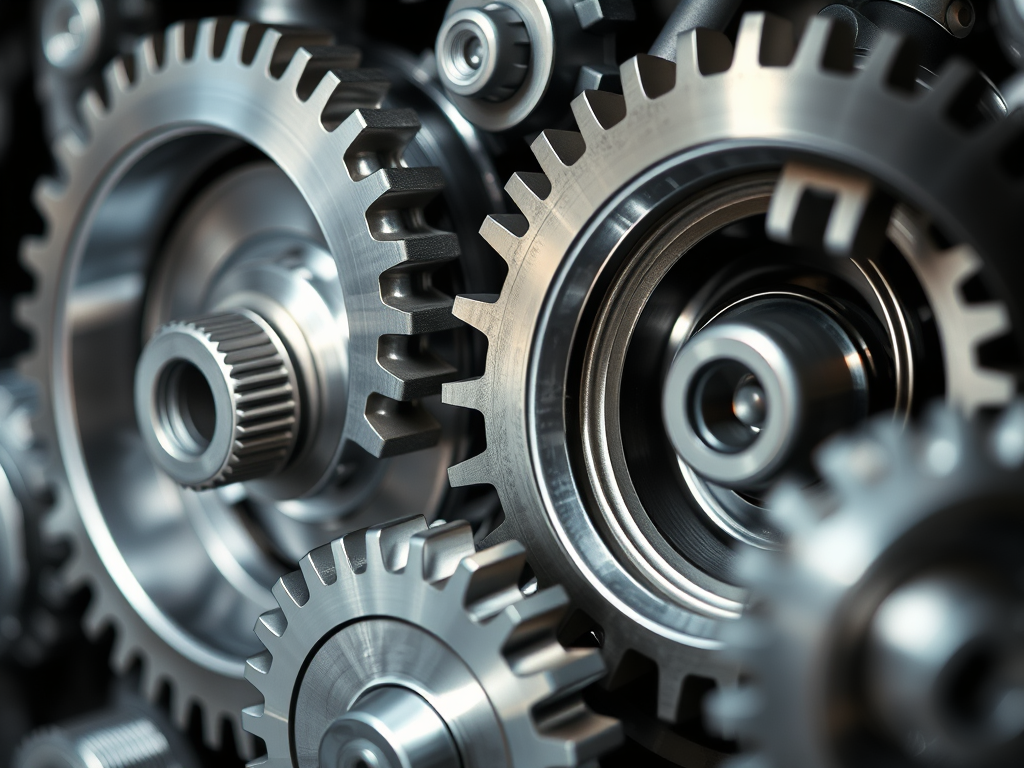
A torque converter is a component commonly found in automatic transmissions, providing a way for the engine to transfer power to the transmission.
Here’s a simplified explanation of how a torque converter works:
- Impeller and Turbine: Inside the torque converter housing, there are two main components: the impeller (connected to the engine) and the turbine (connected to the transmission input shaft).
- Fluid Filled Casing: The impeller and turbine operate in a sealed, fluid-filled casing. Automatic transmission fluid (ATF) is used as the working fluid.
- Stator: Positioned between the impeller and turbine, the stator helps redirect the fluid flow, increasing the torque transmitted to the turbine.
- Lockup Clutch (Optional): In some modern torque converters, there’s a lockup clutch that can mechanically connect the impeller and turbine, eliminating slippage and improving efficiency at higher speeds.
Here’s how it works:
- When the engine is running, the impeller turns, creating a flow of transmission fluid.
- This fluid flow engages the turbine, transferring torque to the transmission.
- The stator helps redirect the fluid, increasing the torque transmitted to the turbine.
- The torque converter allows for torque multiplication, aiding in vehicle acceleration.
- At higher speeds, some torque converters have a lockup clutch that engages, creating a direct mechanical link between the engine and transmission, bypassing the fluid coupling. This reduces energy loss and improves fuel efficiency.
Torque converters are commonly used in automatic transmissions, providing a smooth and automatic engagement of the transmission without the need for a manually operated clutch. They are especially prevalent in many traditional automatic transmission vehicles.
A planetary gear system, also known as an epicyclic gear system, is a complex arrangement of gears that consists of three main components: a sun gear, planet gears, and a ring gear.
- Sun Gear: This is the central gear in the system. It’s typically located at the center and remains stationary or is connected to a power source.
- Planet Gears: These gears revolve around the sun gear. They are mounted on a carrier, allowing them to rotate.
- Ring Gear: The outer gear in the system, surrounding the planet gears. It meshes with and is driven by the planet gears.
The planetary gear system allows for several different configurations and modes of operation. One of the key features is its ability to provide various gear ratios, making it versatile in automotive transmissions, such as in CVTs (Continuously Variable Transmissions) and hybrid systems.
In a planetary gear system, the arrangement of these gears enables controlled and continuous variation of the output speed and torque. The speed and direction of rotation depend on which component is fixed, which is driven, and which is the output. This versatility is particularly useful in applications where smooth and variable speed transmission is essential, such as in the eCVT of hybrid vehicles.
Hybrid vehicles commonly use an eCVT system, and one notable example is the Toyota Hybrid Synergy Drive (HSD). Here’s a simplified overview of how the eCVT functions in a typical Toyota hybrid car:
- Gasoline Engine: The car has a traditional gasoline engine.
- Electric Motor/Generator (MG1 and MG2): Two electric motor/generators are employed. MG1 functions as a generator and is connected to the engine, converting mechanical energy to electricity. MG2 acts as a drive motor, providing electric propulsion.
- Planetary Gear System: Toyota’s eCVT uses a planetary gear system that blends power from the gasoline engine and the electric motors.
- CVT Pulleys and Belt: A continuously variable transmission system uses pulleys and a belt to smoothly vary the gear ratio, allowing seamless transitions between power sources and maximizing efficiency.
- Power Split Device (PSD): This device, part of the planetary gear system, manages the distribution of power between the gasoline engine and electric motors.
- Battery Pack: Energy generated by the gasoline engine or regenerative braking is stored in a high-voltage battery pack.
- Electronic Control Unit (ECU): The ECU controls the entire system, deciding when to use the gasoline engine, electric motors, or a combination of both for optimal performance and fuel efficiency.
In essence, during certain driving conditions, the car can operate solely on electric power, solely on the gasoline engine, or a combination of both, seamlessly transitioning between these modes. This design enhances fuel efficiency and reduces emissions, making hybrid cars popular for their eco-friendly features.
 Envisage
Leave a comment